
10 min read · AI transformation · AI strategy
What is an AI transformation?
Capio team

A practitioner’s take on AI transformation. Definition, building blocks, gated stages, measurement, risks and when not to transform, with dated sources from McKinsey, IBM, IDC and Gartner.
AI transformation is the deliberate redesign of how your organisation creates value using AI across decisions, processes, products and your operating model. It is strategic and measurable change, not a tool rollout. That scope is consistent with definitions from IBM Think and The Hackett Group.
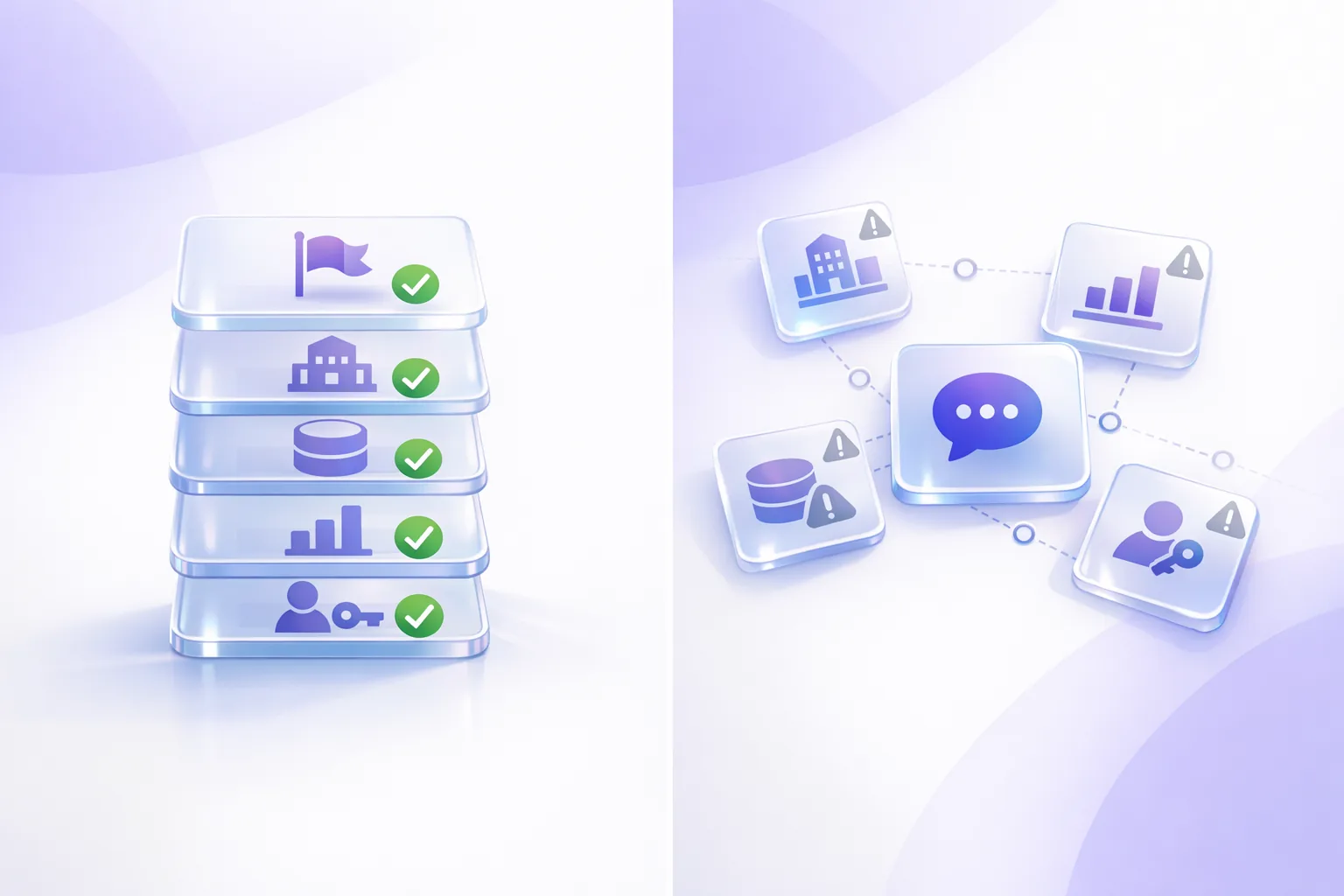
A quick test: if the way work is done, measured and governed changes end to end, you are transforming. If you have scattered pilots or a chatbot but no change in accountability, data, decision rights or metrics, you are not.
Leaders who rewire for AI report material gains, although results vary by context. McKinsey analysed 20 leading companies and reported an average 20 percent EBITDA uplift, breakeven in one to two years, and about 3 dollars incremental EBITDA per 1 dollar invested, from their own study of leaders in 2026 (McKinsey manifesto).
What is an AI transformation?
It is a company-wide shift where AI capabilities are embedded in how you plan, operate and improve the business, with governance and measurement built in. It goes beyond adopting models or platforms to include leadership, culture, processes and data as core parts of change, as described by IBM and Hackett.
How do I tell the difference between transforming and just adding AI tools?
Use this litmus test.
- You are transforming if: the board and executive team own a clear AI strategy, there is a funded operating model, an AI governance mechanism with decision rights exists, priority use cases have baselined metrics, and teams have changed how they work to deliver and scale them.
- You are only adding tools if: teams install a model or a vendor app, but there is no shared roadmap, no inventory of AI uses, no risk controls, unclear ownership and no measured improvement against a baseline.
Why does AI transformation matter now?
Most organisations use AI somewhere, but far fewer scale it and capture value across the business. In McKinsey’s 2025 survey, 88 percent reported using AI in at least one function and about one third had begun scaling, with scale more common in larger firms (McKinsey State of AI 2025). IDC research reports an average 3.7 times return per 1 dollar invested in generative AI, noting results vary by method and context (IDC ROI brief).
Where does the value usually come from in practice?
- Operations: cycle time reduction, fewer errors, better forecasts
- Customer experience: faster resolution, higher satisfaction
- Products and services: new features and experiences powered by AI
- Decisions: improved pricing, risk and inventory choices
- Developer productivity: safer, faster delivery when governed
McKinsey’s 2026 leaders reported an average 20 percent EBITDA uplift and about 3 dollars incremental EBITDA per 1 dollar invested, from their internal study of 20 companies. Treat this as indicative of upper-quartile programmes, not a universal baseline (McKinsey manifesto).
How does an AI transformation work in a real organisation?
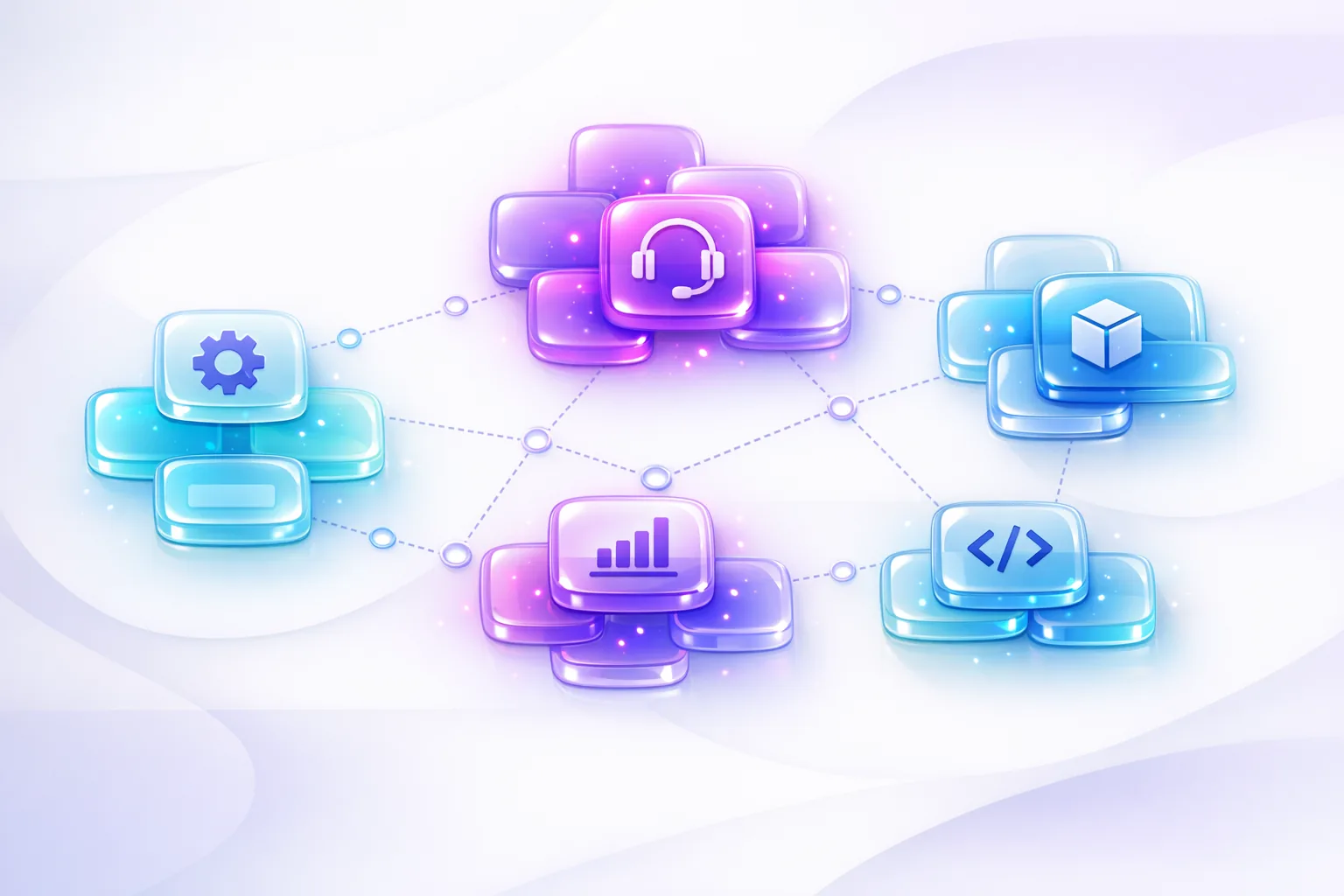
It starts with a clear baseline, a focused strategy and an operating model that includes governance and delivery. You identify a handful of high-conviction use cases, run them through gates, measure results, then scale what works into platforms and ways of working.
What are the minimum building blocks and what does mature look like?
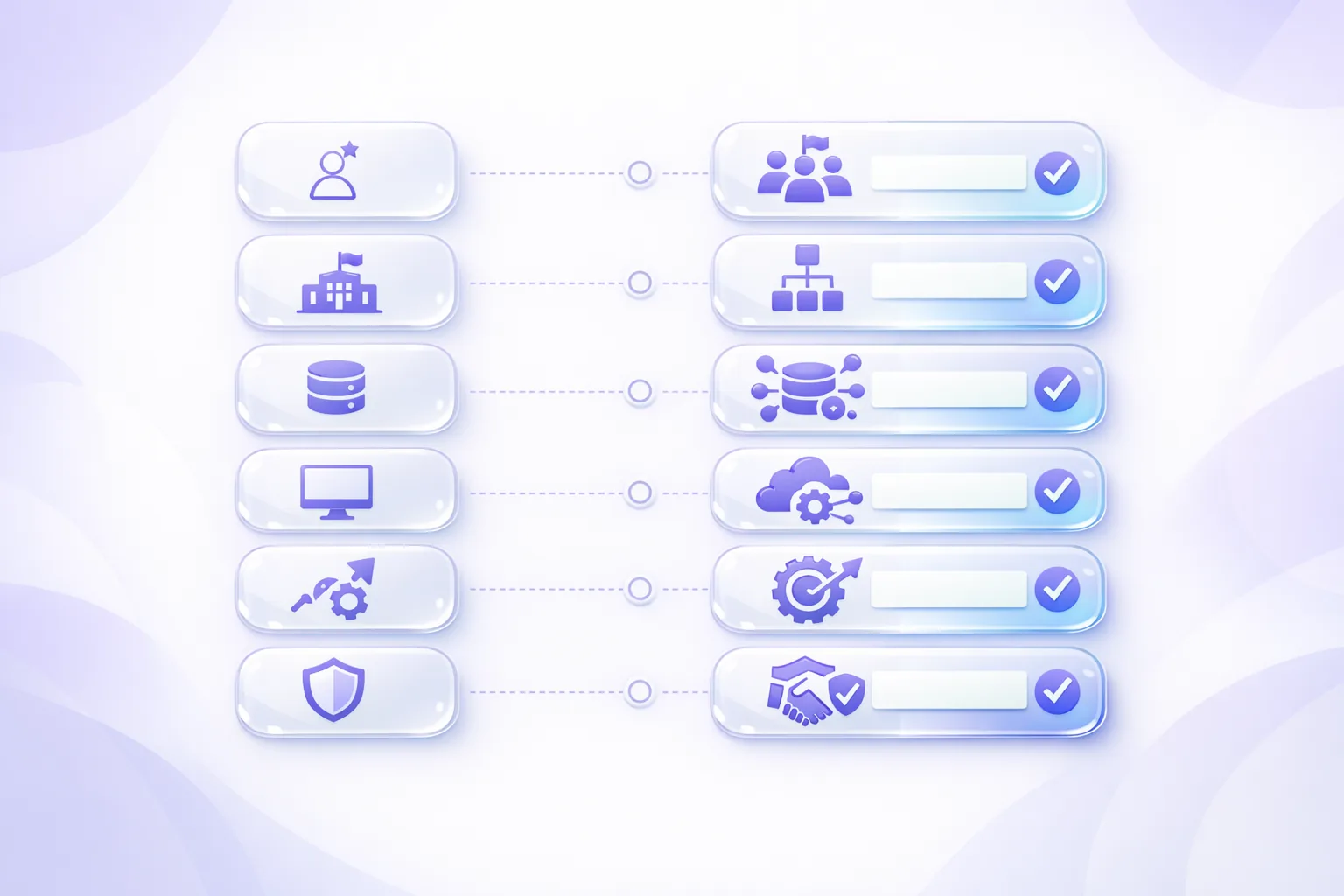
| Building block | Minimum viable | Mature and scaled |
|---|---|---|
| Leadership | Named executive owner and board visibility | Board-level accountability with a standing steering committee and clear decision rights |
| Governance | Basic guardrails and approvals for pilots | Committee charter, responsible AI guardrails, human-in-the-loop rules, impact assessments where required, AI inventory and risk register, and board reporting |
| Data | Access to source data for priority use cases | Data products with clear owners, quality SLAs and secure access patterns for AI |
| Technology | Safe, policy-compliant sandbox and toolchain | Enterprise-grade platforms, observability, deployment patterns and resilience for AI |
| Capability | Core team can deliver a pilot | Cross-functional teams that can ship and run AI products, with training for executives and staff |
| Measurement | Baselines for pilot metrics | Metrics aligned to business outcomes, with consistent reporting and review |
| Trust | Documented risk acceptance and review | Embedded responsible AI practices with audit-ready artefacts and ongoing monitoring |
The themes align with what leaders describe as rewiring beyond technology alone (IBM topic).
Who should own it and what decisions do they make?
Business leadership owns the outcomes. An executive sponsor sets priorities and accepts risks. A governance body makes decisions on use case approvals, acceptable risk, human oversight, data access and go or no-go at stage gates. Product owners, data and engineering leads run delivery to those decisions. This division of responsibility is consistent with leadership and trust themes highlighted by McKinsey.
What are the stages and typical timelines?
A practical gated path keeps momentum and reduces risk:
- Proof of concept: typically two to six weeks to test a narrow slice with real data
- Minimum viable product: typically one to three months to stand up a usable product in one context
- Enterprise solution: the stable product run by the client team, plugged into platforms and governance
These timeboxes are common in practitioner programmes and match delivery patterns used in pilots and gates work.
What evidence do you need at each gate to move forward?
- Proof of concept to MVP: a clear value signal against a baseline, acceptable model and data risks under guardrails, a plan for human oversight and a stakeholder who will adopt the MVP
- MVP to enterprise: sustained outcome improvement versus control, run cost in line with the case, security and compliance approvals, support processes defined, and owners for data and product

How do you measure value from day one?
Set baselines before you start and instrument outcomes in production. Track business outcomes relevant to each use case, not only model metrics. IBM’s Institute for Business Value reported that only 29 percent of organisations say they can reliably measure ROI from AI initiatives, which is a warning to make measurement design part of the work from the start (IBM IBV brief).
What baselines matter and what should you stop?
- Typical baselines: cycle time, error or defect rate, customer satisfaction, revenue or margin per unit, cost to serve, agent handle time, first contact resolution
- Design for decision: define what improvement would justify scaling, how you will measure it and who decides
- Stop rules: if real-world results do not beat the baseline after an agreed period, or risks remain unacceptable, stop or reshape the effort and reallocate the team

What are the common failure patterns and how do you avoid them?
Stalling between pilot and scale is the most common pattern. Gartner reported that by the end of 2025 at least half of generative AI projects were abandoned after proof of concept, and in 2026 only 28 percent of infrastructure and operations AI initiatives fully succeeded while 20 percent failed outright (Gartner on genAI project outcomes, Gartner I and O outcomes).
Avoidance patterns that work:
- Start with business-owned cases and baselines, not model-first experiments
- Put governance and decision rights in place before scale
- Invest in data quality for the few cases you will scale
- Plan adoption and support, not just development
- Review outcomes regularly and stop weak initiatives
How do newer enterprise figures change the old "most projects fail" trope?
They point to a more useful truth: many projects stall before meaningful ROI rather than AI failing outright. A gated path with clear evidence to pass each stage, risk controls and owner accountability improves the odds of moving from demo to durable value.
What organisational capabilities does it require?
You need cross-functional product teams and an operating cadence that couples business ownership with technical delivery and governance. Capabilities span leadership, governance, data, technology, measurement, skills and trust, reflecting the building blocks above.
What changes for people, culture and skills?
- Executives set direction and own outcomes with regular, informed trade-offs
- Product, data and engineering teams work as one team with clear owners
- New skills appear where needed, such as prompt or agent design, evaluation and monitoring
- Culture shifts from experiments everywhere to evidence-driven scale in a few places that matter
What risks and governance questions come up?
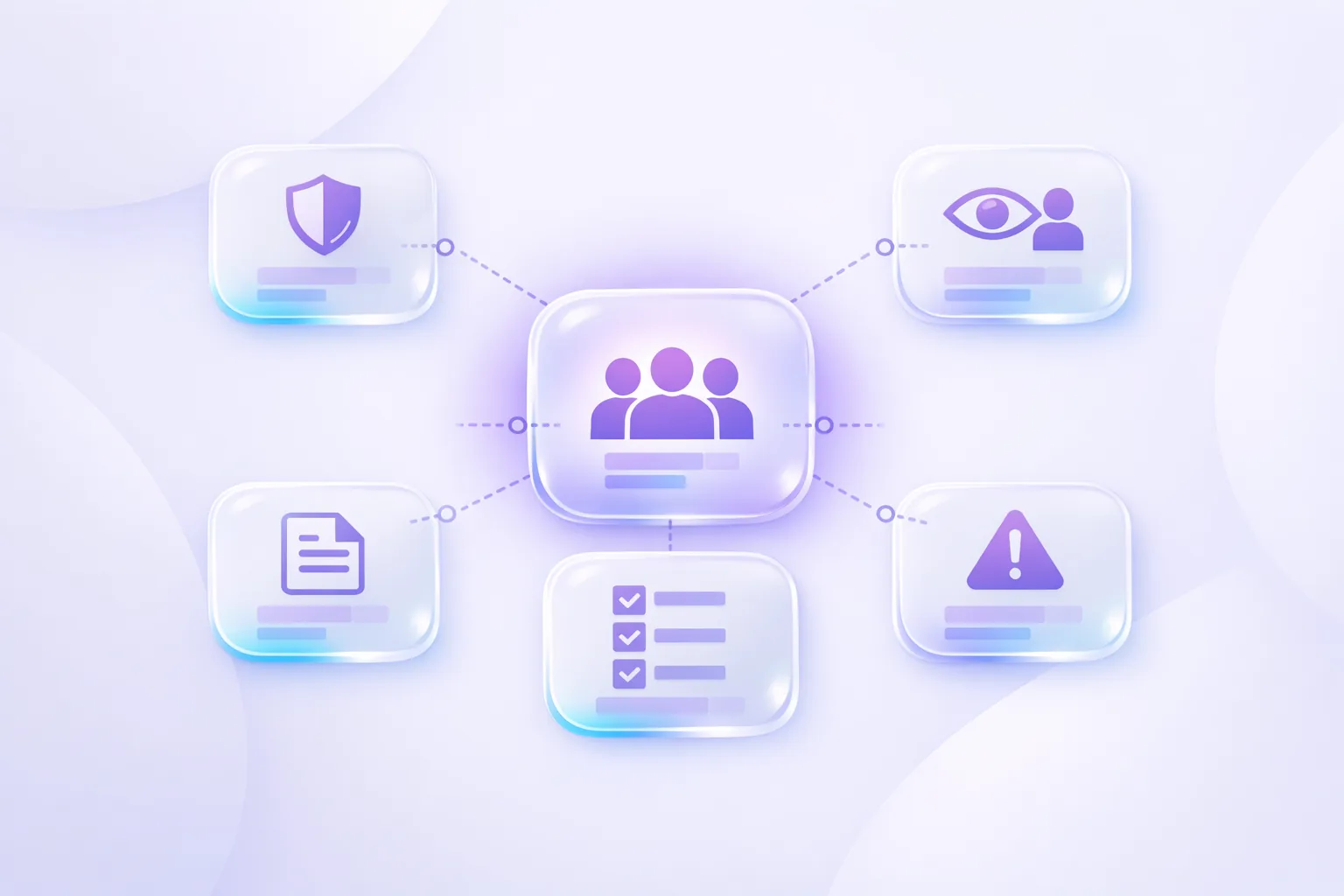
Trustworthy adoption needs a formal governance setup: a chartered committee, responsible AI guardrails, human-in-the-loop rules, impact assessments where required, an AI inventory and risk register, and regular reporting to leadership. These are practical controls organisations use to reduce risk while maintaining speed.
What does trustworthy adoption look like?
- Risk-based controls that scale with impact and sensitivity
- Clear human oversight where outcomes affect customers, safety or rights
- Documented decisions on data use, model choice and monitoring
- Audit-ready artefacts for material uses
How do you prioritise use cases for first wins and compounding gains?
Focus where AI can influence outcomes that matter and where you can verify results quickly. The Anthropic Economic Index maps task exposure to AI, which can inform where to look. Analyst work has combined that index with standard process frameworks to suggest priority areas, but your data readiness and objectives should drive the final list (Anthropic Economic Index).
Which functions tend to yield durable returns versus good demos?
- Durable returns: customer support triage and assist, knowledge search and retrieval for frontline teams, forecasting and replenishment, quality and safety monitoring, software delivery support with governance
- Good demos, thin returns if isolated: generic content generation with no distribution change, pilots without owners, tasks with subjective outcomes and no baseline
How does CAPIO PRO approach AI transformation?
- Readiness assessment. We score seven pillars of leadership, governance, data, technology, capability, measurement and trust, and deliver an AI Health Score with a leadership readout in three to four weeks. Why: a shared baseline speeds decisions and focuses investment.
- Pilots through gates. We run proofs of concept in two to six weeks, then minimum viable products in one to three months, then help the client own an enterprise solution. Why: tight gates cut waste and create evidence to scale.
- An embedded operating system. We embed for six to twelve months, minimum six, across foundation, capability, execution, then scale and handover, with a monthly steering committee that has real decision rights. Why: outcomes improve when decisions, delivery and governance move together.
- Fractional Chief AI Officer. We provide the leadership layer with a first ninety days focused on the baseline, governance and first decisions, and we plan the exit from the start. Why: you get momentum and a leadership pattern your team can run.
- Governance that enables speed. We set up the committee charter, guardrails, human-in-the-loop rules, impact assessments where required, and an AI inventory and risk register with board reporting. Why: clear rules let teams move fast without crossing red lines.
- Designed for handover, not dependency. We build assets and operating habits the client owns. Why: capability should outlast the engagement.
What do you get and how is capability handed over?
You get an agreed baseline and score, a prioritised roadmap, working products that moved through gates with evidence, a running governance mechanism, and an operating cadence with owners. We design the programme so you keep the artefacts, the rhythm and the skills.
Frequently asked questions
When should we not attempt a full transformation?
Do not attempt a company-wide push if leadership cannot own outcomes, there is no budget for data and operating model work, or you cannot measure value credibly. In those cases, run a few governed pilots to learn, build the baseline and revisit scope.
Do small organisations need an AI operating system?
Smaller firms benefit from the same principles, applied lightly. Focus on one or two high-impact use cases, put simple guardrails in place, baseline outcomes and review them monthly. Build only the minimum governance and platform you need to scale what works.
How do we choose between building in-house and partnering?
Use cases that touch core advantage, sensitive data or differentiation often merit in-house ownership with selective external help. Commodity capabilities or accelerators can be partnered. In both cases, insist on baselines, gates, risk controls and a clear plan to operate the result.
Where to start
Set a baseline and agree where AI can change outcomes that matter. If you want an external view and a practical plan you can run, get in touch with our team.