
9 min read · AI strategy · IT plan
What is an AI business strategy, and how is it different from an IT plan?
Capio team

A plain-English answer to AI business strategy vs an IT plan, with a side-by-side comparison, a hand-off playbook and quick tests you can run this week.
An AI business strategy sets where and why your organisation will use AI to create value. It defines outcomes, the use cases that matter, the choices you will make and the guardrails you will respect.
An IT plan explains how you will deliver those choices safely and reliably. It turns strategy into systems, data, integrations, security and operations.
They are distinct but interlocked. The strategy says what to achieve and where to win. The IT plan says how to build, integrate and run it. Many leadership teams feel the gap: in one study, 79% of executives expect AI to contribute significantly to revenue by 2030, but only 24% have a clear view of where that revenue will come from, and 68% worry efforts will fail without integration into core business activities (IBM Institute for Business Value, 2026).
What is an AI business strategy?
It is a documented plan for how your organisation will use AI to achieve specific business outcomes. It links your goals to a focused portfolio of use cases, the capabilities you will build or buy, and the rules you will follow.
Good AI strategy decisions cover:
- Where the value is, and which use cases to do first, next and never
- Build versus buy, including platform choices and vendor boundaries
- The data you need, the data you can use today and how to close gaps
- Governance and risk guardrails over time, not just at launch
- Organisation capability, roles and the change people will see
Analysts advise aligning AI strategy with both the business strategy and the enabling technology strategy, and keeping a portfolio view with an operating model to run it (Gartner).
What is an IT plan?
It is the technology delivery plan that supports business outcomes. It describes the systems, data, security and operations that make AI work in production.
Typical contents include:
- Target and current-state architecture, and how data flows between systems
- Integration design, APIs and eventing
- Identity, access, privacy and security controls
- Data engineering, model development, MLOps and monitoring
- Service levels, support processes and incident response
- Budgets, skills and sourcing to build and run
A strong IT plan prevents a common anti-pattern: pilots that work in isolation but fail at integration, security or adoption once real users arrive.
How is an AI business strategy different from an IT plan?
The simplest split is this: strategy answers why and where, a plan answers how and when. An IT strategy sets the foundation of systems, data and operations. An AI business strategy activates that foundation by deciding where AI applies to create value.
| Dimension | AI business strategy | IT plan |
|---|---|---|
| Core focus | Business value, where to play and why | How to deliver safely and reliably |
| Primary questions | Which use cases, what outcomes, build or buy, what guardrails | What systems, integrations and controls, how to operate |
| Typical contents | Use case portfolio, priorities, governance principles, capability roadmap | Architecture and integration plans, data pipelines, MLOps and monitoring setup, security and operations |
| Evidence of success | Production systems delivering measurable business outcomes | Stable, secure and integrated delivery and operations for the chosen use cases |
| If missing | Activity without direction, scattered pilots, low ROI | Retroactive fixes, security gaps, stalled deployment and scale |
Do not merge them. Conflating strategy with a technology roadmap is a frequent failure mode.
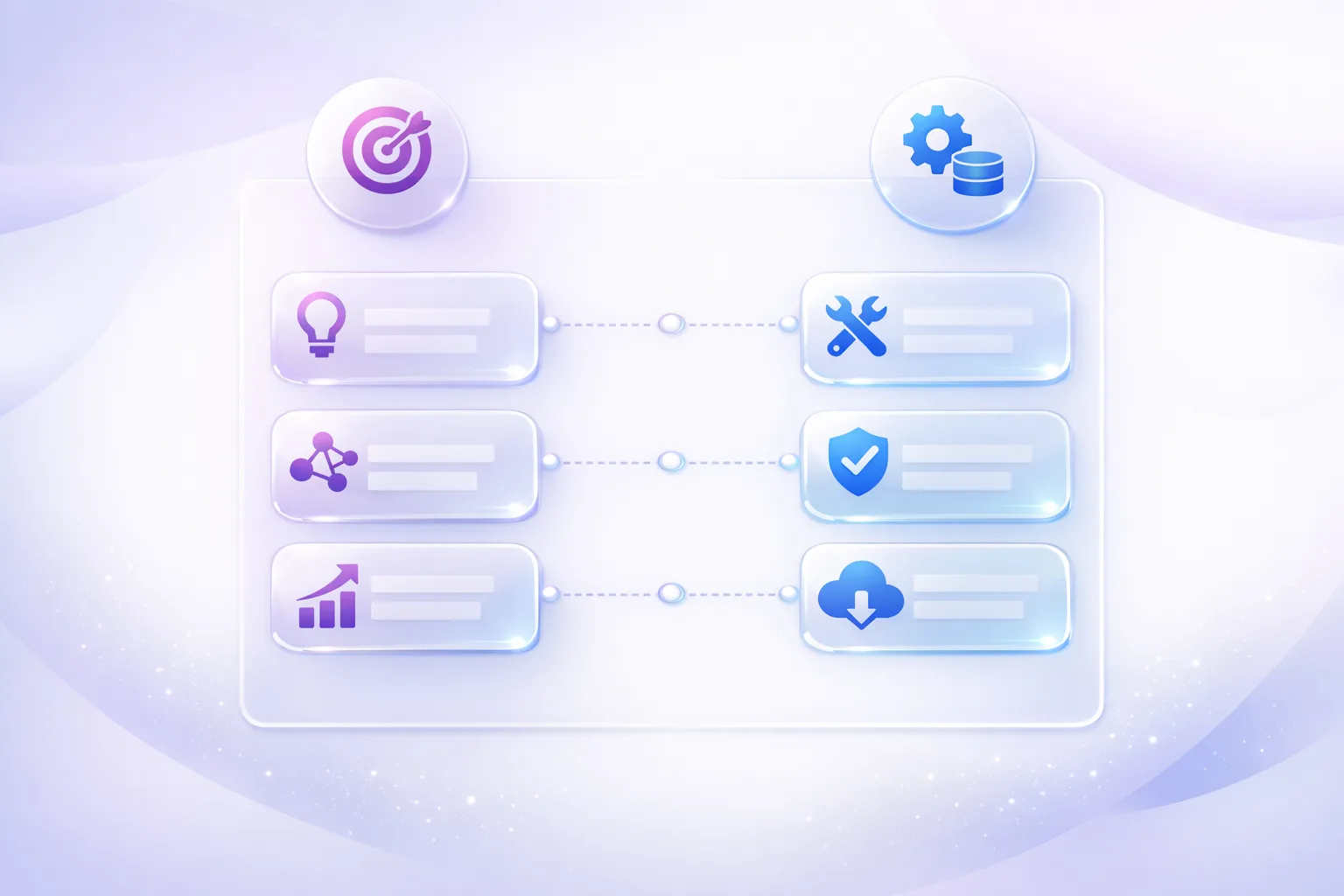
Where do AI business strategy and the IT plan meet in practice?
They meet at the hand-off for each use case:
- The business side defines the outcome, success measure and guardrails
- The technology side translates that into architecture, data, integration and controls
- Both sides agree the smallest evidence required to move from idea to build to scale
- Review on a regular cadence, adjust priorities and controls as evidence arrives
In regulated contexts, expect stronger documentation and explicit controls. The pattern is the same: decide outcomes and guardrails in strategy, then operationalise controls in the IT plan.

What does good look like in ninety days and twelve months?
Ninety days
- A baseline of where you are today and where value likely sits
- Two or three priority use cases, with outcomes and build versus buy choices stated
- One first pilot through a proof of concept gate with clear evidence criteria
- Simple governance guardrails and decision rights written down
Twelve months
- Several production systems in daily use, each with owned outcome metrics
- A living portfolio view that shows what is shipped, what is next and what stopped
- Shared data and MLOps capabilities that reduce time to value for the next use case
- A simple operating rhythm between business and IT that updates strategy with evidence
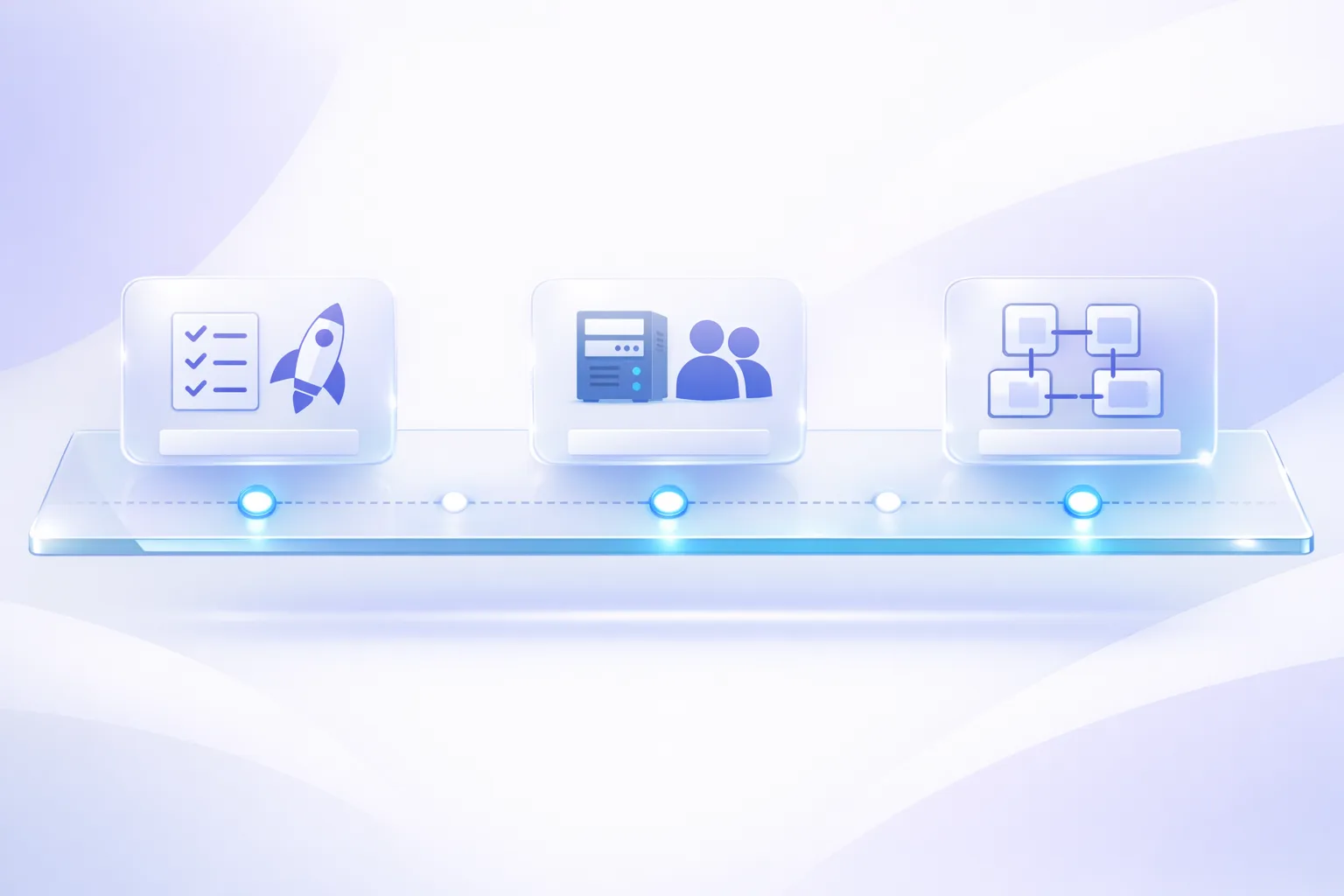
What sequence actually works?
Treat strategy and implementation as a loop, not a line. A lightweight strategy phase of four to eight weeks is usually enough to choose a few use cases, set guardrails and start building. Then build, learn and update the strategy, and repeat.
If you are stuck running ungoverned proofs of concept, pause. Add the missing strategy layer so pilots are tied to outcomes, decision rights and controls. If you already have one or two systems in production, scale to adjacent use cases and invest in shared MLOps and data foundations.
A practical rule of thumb: if you do not see production impact inside six months, assume something is off in foundations, focus or ownership and fix it before adding more pilots.

How to test if you have a strategy or just a plan
- The budget cut test. If your AI budget were halved tomorrow, what would you stop first and why. A fast, confident answer that ties to outcomes signals a strategy. A vague answer signals a plan.
- The portfolio test. Can you show a prioritised list of use cases with reasons, what must continue and what can wait. If the answer is “we will see what the model can do,” you have a plan, not a strategy.
- The measurement test. If you can only point to model accuracy, not business metrics and adoption, you are missing strategy.
If you fail a test, write down outcomes, decision rights and guardrails for one use case this week. Then use that to update the IT plan.
What to measure at each level
Measure different things at different levels and make them meet:
- Business outcomes per use case: revenue lift, cost to serve, risk reduction
- Adoption: active users, task completion, time saved, satisfaction
- Time to value: time from idea to first production use, and from first use to measurable impact
- Reliability and safety: data quality, drift, incident rates, response times
This split matters. A large majority of executives expect AI to drive revenue but many cannot say where it will come from, and many worry about poor integration with core work (IBM Institute for Business Value, 2026). Track both the source of value and the quality of delivery.

Common mistakes to avoid
- Treating strategy as a one-off document instead of a loop with implementation
- Conflating strategy with a technology roadmap
- Having no named business owner for a use case
- Running disconnected proofs of concept with no governance
- Measuring only model accuracy, not outcomes and adoption
What to do instead: keep a living portfolio and guardrails, tie each pilot to an outcome, give a named owner decision rights, and update the strategy with real usage data.
What this means for your IT leaders
- Ask for clear outcome targets, decision rights and guardrails for each use case
- Build shared data and MLOps capabilities that shorten the next implementation
- Keep a small set of service measures that support business outcomes
- Bring security, privacy and risk into the design from day one
- Publish the integration plan that pulls AI into core processes and systems
How does CAPIO PRO approach AI business strategy?
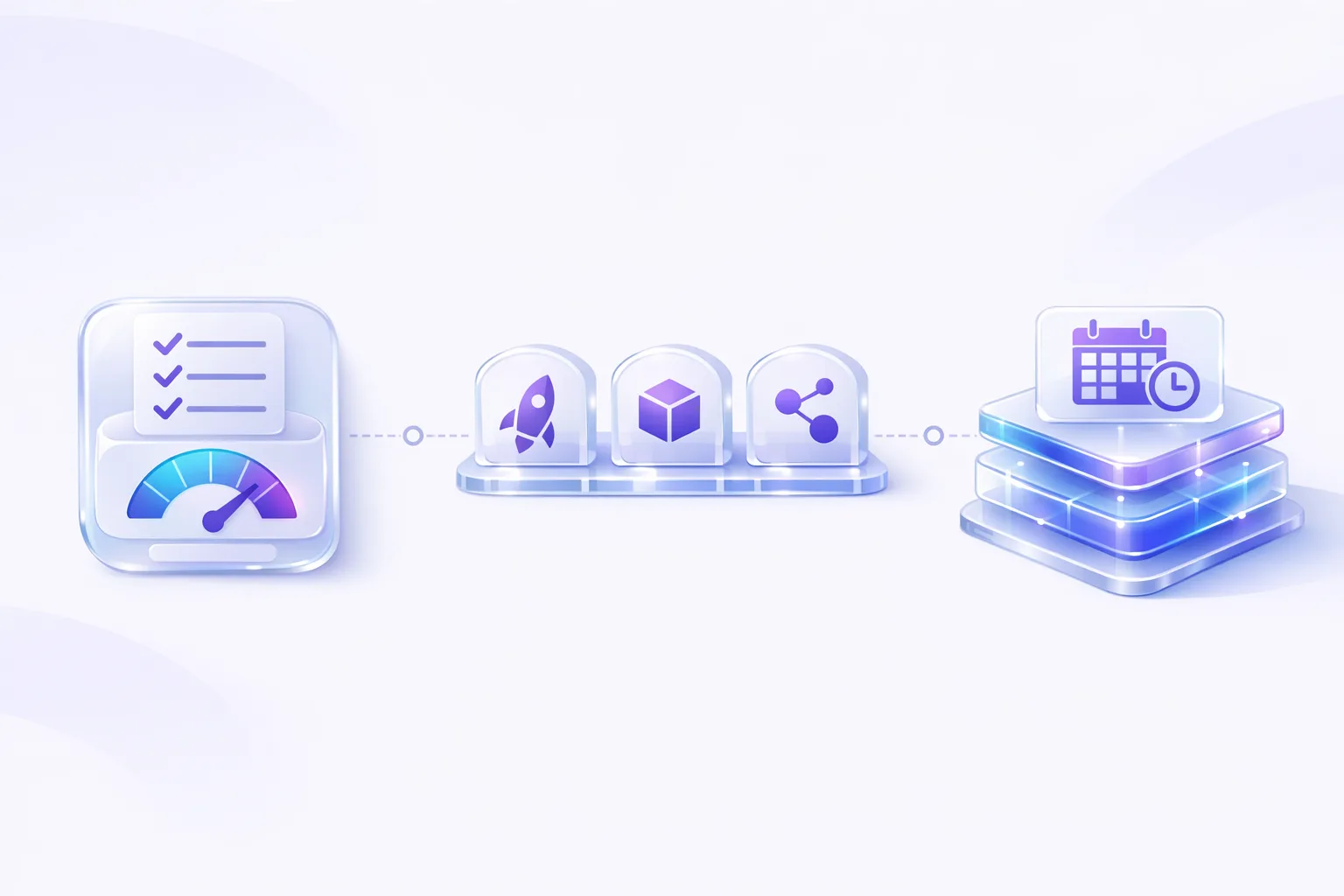
- Readiness assessment, three to four weeks to leadership readout. We baseline leadership, governance, data, technology, capability, measurement and trust, and produce an AI Health Score. Why: decisions are faster when the baseline and risks are clear.
- Pilot gates. Pilots move through proof of concept in two to six weeks, then minimum viable product in one to three months, then an enterprise solution owned by your team. Why: evidence at each gate prevents waste and forces real adoption work early.
- AI operating system, six to twelve months with a monthly steering committee. We run foundation, capability, execution, then scale and handover. Why: a cadence with decision rights ties the portfolio to outcomes and leaves you with an operating rhythm, not a dependency.
Frequently asked questions
Do we need an AI strategy if we already have a digital transformation programme?
Yes. Digital transformation is broader. An AI strategy sits within it and decides where AI creates value, what guardrails apply and how you will measure success. It should align with your business and enabling technology strategies (Gartner).
Can we build a strategy without a data platform in place?
You can set direction, guardrails and a use case portfolio now. Without an underlying IT strategy and integrated systems you are likely to stall at pilots, so address foundations in parallel as you move to build.
How long should we spend on strategy before building anything?
A lightweight strategy phase of four to eight weeks is usually enough before you start building, then you should treat strategy and implementation as a loop.
Who should own AI decisions at board and executive level?
Give each use case a named business owner with decision rights and a technology owner for feasibility and controls. A missing business owner is a common cause of drift and low adoption.
Where to start
If you want a practical, business-first strategy that connects cleanly to an IT plan and ships real systems, talk to us.